
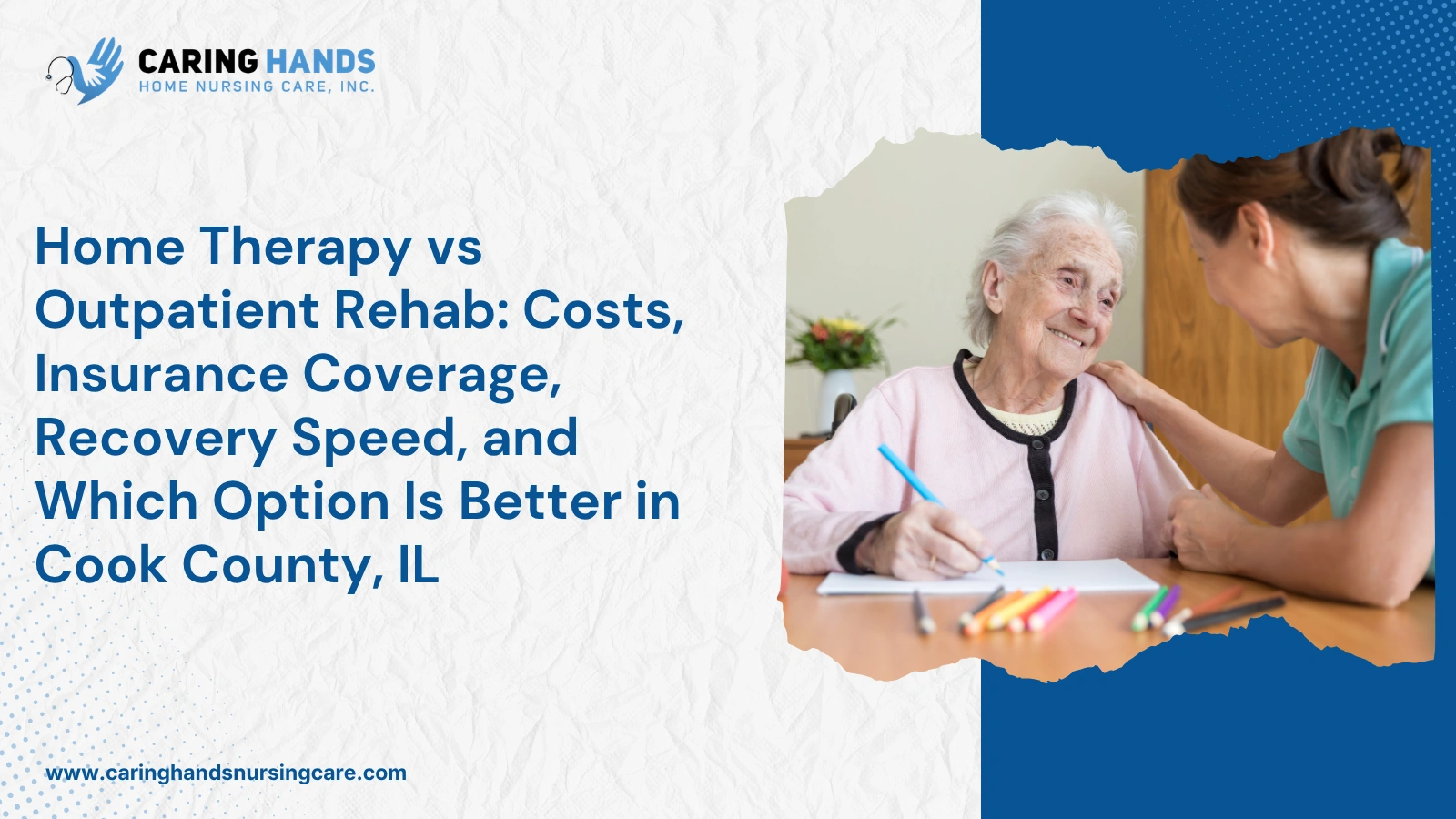
Recovering after surgery, illness, injury, or hospitalization often requires professional therapy support. Many families across Cook County struggle to decide whether home therapy or outpatient rehabilitation is the better option. Both approaches support recovery, but the experience, cost structure, scheduling, and level of convenience can vary significantly.
For seniors, adults recovering from surgery, and individuals managing mobility limitations, the right therapy setting can directly affect comfort, consistency, and long-term progress. Understanding how these services differ helps families make informed care decisions without unnecessary stress or delays.
What Home Therapy and Outpatient Rehab Actually Mean
Home therapy provides rehabilitation services directly inside the patient’s residence. Licensed therapists visit the home to assist with physical therapy, occupational therapy, or speech therapy while adapting exercises to the patient’s living environment.
Outpatient rehabilitation requires patients to travel to a clinic or therapy center for scheduled appointments. These facilities often provide access to specialized equipment and multiple therapy disciplines under one roof.
Both approaches aim to improve mobility, strength, balance, coordination, and independence. The difference usually comes down to convenience, supervision level, transportation needs, and recovery circumstances.
Why More Families in Cook County Are Choosing Home Therapy
Across Cook County, many patients prefer recovering at home because it reduces physical strain and transportation challenges. This is especially important after surgery, illness, or hospitalization when travel may feel exhausting.
Home therapy also allows therapists to identify real-life safety concerns within the patient’s daily environment. Stair navigation, bathroom accessibility, and fall risks can all be addressed more effectively during in-home sessions.
Comfort: Patients often feel more relaxed and confident in familiar surroundings
Convenience: Eliminates transportation coordination and waiting room delays
Personalized care: Therapy plans are adjusted to the patient’s actual living conditions
Families also appreciate the ability to combine therapy with services like Personal Care Services for additional daily support.
Situations Where Outpatient Rehab May Be Recommended
Outpatient rehabilitation can be beneficial for individuals who require advanced therapy equipment or intensive rehabilitation programs. Patients recovering from sports injuries, major orthopedic procedures, or neurological conditions may benefit from specialized clinic-based treatment.
Therapy centers may also offer longer sessions and access to multiple specialists during the same visit. For highly mobile patients, outpatient care can provide structured rehabilitation in a dedicated clinical environment.
However, regular transportation and scheduling flexibility remain important considerations, especially in heavily populated areas throughout Cook County.
Comparing Recovery Speed Between Home Therapy and Outpatient Rehab
Recovery speed depends less on location and more on consistency, patient participation, and care quality. Many studies show that patients recovering at home often maintain therapy compliance because sessions are easier to attend.
Home therapy supports practical daily recovery by focusing on real-world movement challenges. Patients practice navigating their own kitchen, hallway, stairs, and bathroom rather than simulated environments.
Outpatient rehab may accelerate recovery for patients requiring specialized machines or intensive exercise programs. The best option depends on the patient’s condition, strength level, transportation access, and overall health.
Home therapy benefits: Supports functional recovery within everyday routines
Outpatient benefits: Provides advanced rehabilitation equipment and specialized programs
Consistency matters most: Missed appointments can delay progress regardless of setting
Cost Differences Between Home Therapy and Outpatient Rehab
Cost is one of the most common concerns families have when comparing rehabilitation options. In many cases, insurance coverage determines out-of-pocket expenses more than the therapy location itself.
Home therapy may include travel-related billing factors, while outpatient clinics may charge facility fees depending on treatment type. Costs can also vary based on therapy frequency, session duration, and insurance limitations.
Several factors influence rehabilitation expenses:
Insurance plans: Medicare, Medicaid, and private insurers may cover therapy differently
Therapy frequency: More weekly sessions can increase total costs
Care complexity: Specialized rehabilitation programs may cost more
Additional services: Combining therapy with Skilled Nursing Services may affect billing structures
Families should always verify authorization requirements and copay responsibilities before starting care.
Insurance Coverage for Home Therapy in Illinois
Many insurance providers, including Medicare, cover medically necessary home therapy when eligibility requirements are met. Patients often qualify after hospitalization, surgery, injury, or physician referral.
Coverage may include:
Physical therapy: Mobility, strength, and balance recovery
Occupational therapy: Daily living skill improvement
Speech therapy: Communication and swallowing rehabilitation
According to Medicare guidelines, home health therapy services must generally be considered medically necessary and ordered by a physician. Families can review official eligibility details through the Medicare Home Health Services resource.
Insurance approval often depends on mobility limitations, physician documentation, and treatment goals.
Transportation Challenges That Affect Recovery
Transportation is frequently overlooked when families compare rehabilitation options. In Cook County traffic conditions, winter weather, parking limitations, and physical fatigue can all impact therapy attendance.
For seniors or individuals with mobility limitations, repeated travel to outpatient facilities may become physically demanding. Missed appointments can interrupt recovery progress and reduce therapy consistency.
Home therapy removes many of these barriers while supporting safer recovery routines inside the home environment.
Which Option Works Better for Seniors Recovering at Home
Older adults recovering after hospitalization often benefit from home-based rehabilitation because therapy sessions focus on independence and fall prevention within familiar surroundings.
Therapists can directly assess household hazards and recommend modifications that improve safety. This practical approach is difficult to replicate in outpatient settings.
Home therapy is commonly paired with:
Companion Care Services: Social support and daily routine assistance
Alzheimer’s & Dementia Care Services: Structured support for memory-related challenges
Therapy Services: Coordinated rehabilitation and recovery planning
These combined services help seniors remain safer while reducing caregiver stress for families across Cook County.
Common Mistakes Families Make When Choosing Rehab Services
Choosing rehabilitation too quickly can lead to avoidable frustrations later. Families sometimes focus only on cost while overlooking scheduling limitations, transportation issues, or physical exhaustion.
Some common mistakes include:
Ignoring mobility limitations: Travel may become harder after discharge
Underestimating fatigue: Frequent transportation can slow recovery
Delaying therapy: Waiting too long may reduce rehabilitation effectiveness
Choosing convenience alone: Clinical needs should still guide decisions
A thorough evaluation from healthcare providers helps families choose care that matches both medical and practical needs.
Real-World Recovery Scenarios in Cook County, IL
In densely populated communities throughout Cook County, home therapy is often preferred for patients recovering after joint replacement surgery, stroke, or extended hospitalization. Many patients experience better consistency when care comes directly to their residence.
Outpatient rehabilitation may work better for younger or highly mobile individuals who require advanced rehabilitation equipment or sports recovery programs.
Recovery needs vary based on:
Home environment: Stair access and mobility safety
Family support: Availability of caregivers during recovery
Medical complexity: Level of rehabilitation intensity required
The right decision depends on the patient’s physical condition, lifestyle, and long-term goals.
How Home Therapy Supports Long-Term Independence
One major advantage of home therapy is its focus on sustainable independence. Therapists teach patients how to safely perform everyday tasks inside their actual living environment.
This includes:
Safe transfers: Getting in and out of bed or chairs
Mobility training: Walking safely through the home
Fall prevention: Identifying environmental hazards
Energy conservation: Managing fatigue during daily activities
These practical improvements often help reduce hospital readmissions and improve confidence during recovery.
Home Therapy Services Available Across Cook County, IL
Families throughout Cook County have access to personalized rehabilitation support through experienced home health providers. Services can often be coordinated alongside nursing care, personal assistance, and caregiver support.
Caring Hands Home Nursing Care, Inc. offers individualized rehabilitation support tailored to patient recovery goals and physician recommendations. Families can explore available coverage areas through the service areas page or browse additional healthcare resources on the company blog.
Community feedback and local updates are also available through this trusted external resource: Caring Hands Home Nursing Care Reviews
Frequently Asked Questions About Home Therapy vs Outpatient Rehab
Families often compare multiple rehabilitation options before choosing care. These common questions help clarify how each approach works and which situations may benefit most.
What is the main difference between home therapy and outpatient rehab?
Home therapy provides rehabilitation inside the patient’s residence, while outpatient rehab requires traveling to a therapy clinic. Home therapy focuses on daily living recovery within the home environment, while outpatient facilities may offer specialized equipment.
Does Medicare cover home therapy services in Illinois?
Yes, Medicare may cover medically necessary home therapy services when prescribed by a physician and eligibility requirements are met. Coverage details vary based on medical condition, therapy needs, and documentation requirements.
Is home therapy better for seniors after surgery?
Home therapy can be highly beneficial for seniors recovering after surgery because it reduces travel strain and focuses on safe mobility inside the home. It is often combined with Companion Care Services or nursing support for better recovery management.
How long does rehabilitation usually take at home?
Recovery timelines vary depending on the patient’s condition, consistency, and therapy goals. Some individuals improve within a few weeks, while others may require ongoing therapy support for several months.
Get Personalized Home Therapy Support in Cook County, IL
Choosing between home therapy and outpatient rehabilitation should never feel overwhelming. The right care plan depends on recovery goals, mobility level, insurance coverage, and daily support needs.
Caring Hands Home Nursing Care, Inc. provides compassionate rehabilitation support designed around comfort, safety, and long-term independence for families throughout Cook County, IL.
📍 Address: 10024 Skokie Blvd. Suite 206 Skokie, IL 60076
📞 Phone: (224) 322-5992
📧 Email: info@caringhandsnursingcare.com
Whether you need therapy support after surgery, illness, or hospitalization, personalized in-home care can help make recovery safer and more manageable.